
This is part of a book I’m writing in public. Subscribe to read the rest as it comes
I worked in corporate for years before I ever met a consultant.
The companies I worked at were not the kind that brought in the big firms. We figured things out ourselves. Sometimes it worked, sometimes it didn’t. Nobody in a suit flew in to tell us what to do.
Then one day, the company grows. We hit something we cannot solve. Process is broken. Revenue is flat. Somebody upstairs wants change. And word goes around that a firm is coming.
We don’t know what that means yet. We are young. We have read the books. We think this is the real thing. People who do this for a living. People who have seen this problem at twenty other companies. People who will arrive with the framework and the experience and the answer.
We feel something close to relief. Finally. Someone who knows.
The first time, we almost believe it.
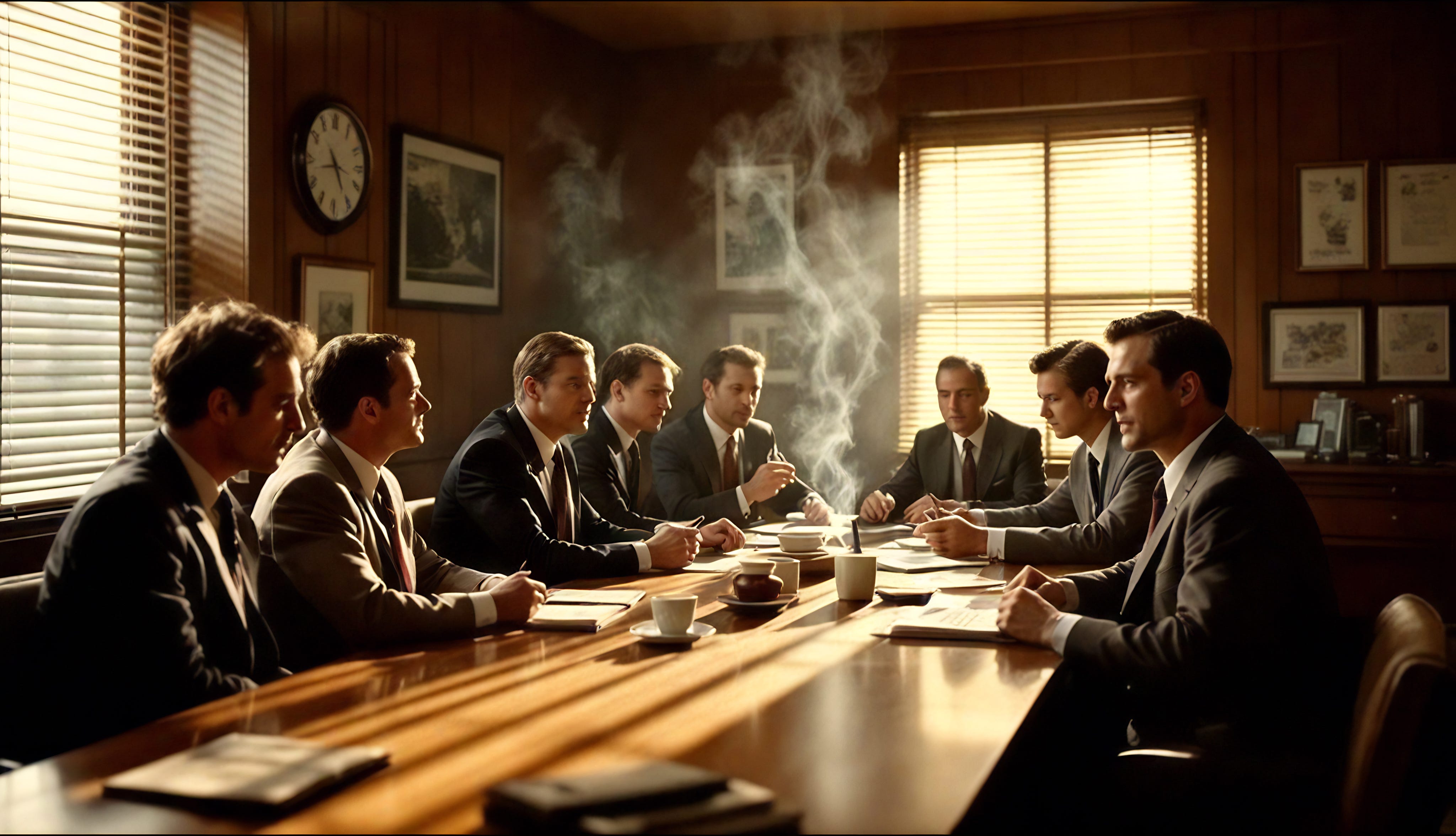
We sit in the workshops. We answer the questions. We give them everything. Our context. Our data. The history nobody outside the company would know. We feel useful. The consultants are sharp. They listen. They ask good questions. They write things down.
A few months later, the deck arrives. The recommendations are made. The engagement ends. They leave.
And something does change. Not as much as promised. But something. A new structure. A new process. A new vocabulary. We go back to work. We think: that was probably worth it.
We are still young.
The second time, we notice things.
We notice the framework on slide four looks identical to the framework we saw last year at a friend’s company. We notice the mid-twenties junior consultant asking us to explain what our team does has never done any of it. We notice the executive announcing the new direction at the town hall is using language that, when we check the workshop notes, was not in the consultant’s original deck. It was in his own email from eight months ago.
We start to see the choreography.
The consultants arrived with a framework. Confident. Pre-baked. The executive arrived with an idea he had wanted to do for a year but did not have the cover to say out loud. The workshops happened. The framework bent. The cover slide kept the firm’s logo. The content migrated. By the final readout, the consultant’s framework was decoration around the executive’s pre-decided answer.
Everyone signed off. The fee was paid. The press release went out. Nobody in the room said the obvious thing.
We said it to ourselves, walking back to our desks.
By the third time, we stop being young.
We see all of it at once. The interviews where we give them our work and they sell it back to us at partner rates. The decks that have been used four times this quarter. The mid-twenties junior running the workshop. We supply the answers. The deck supplies the credit. The deck that says do this when the room knew the answer was it depends. The words that mean nothing to Monday morning. Digital transformation, data driven, AI first, cloud native, customer centric, hyperscale, modernization, strategic alignment. The phase one that ends and the phase two that begins. The decision the internal team had warned about for a year, announced anyway, because the warning did not have a deck and the consultant’s deck did. The framework that wins because it is the framework that was paid for.
The Theatre
We stop calling it a savior. We start calling it what it is.

It is theatre. It is cover. It is permission. It is the executive’s idea wearing a logo that costs more than most teams cost in a year. It is our own work returned to us in a font we didn’t choose. It is the long, slow education in what most of the room is actually paying for.
They are not buying analysis.
They are buying the right to do what they were going to do anyway, with someone else’s name on the slide.
But the executive always knew.
The executive is not fooled by the deck. The executive has read the framework before. The executive has hired three of these firms in three previous companies. The deck is a tool. The logo is a tool. The fee is the cost of the tool. The question is what the tool is being used for.
The tool can be hired by good executives to move a firm that is stuck. Nothing inside will move without external cover. They are trying to deliver an answer the organization cannot accept from someone on the inside. The cost is high. The benefit goes to the company.
This is the good version. The theatre is deliberate. The motive serves the org.
The tool can also be hired by executives serving themselves. Same firm. Same workshops. Same deck. The board is asking questions. The next quarter needs a story. The role requires the appearance of action. The fee is approved. The engagement runs. Something is announced. The executive looks decisive. The org receives no benefit anyone can name, but a quarter has passed.
This is the other version. The theatre is identical. The motive serves the executive.
The deck looks the same from the outside. The motive is invisible until later, sometimes much later, sometimes never.
The person who pays the real price is whoever has skin in the game. The founder. The early investor. The shareholder who actually reads the filings. To a hired executive, the fee is a line item. To them, it is the difference between two roads the company could take.
Unless the company is public. Then nobody cares, as long as the stock rides up.
Rare consultants do arrive without agenda. They are domain experts, specialists, independent advisors. They are hired because nobody inside the firm knows the technical answer. Those people may say no more than they say yes. However the industry runs on the other pattern.
That’s what the consultant actually is. A tool. Not bad, not good. The tool has no morality. The motive of the person holding it is everything. For most of corporate history, that tool was expensive. The fee gated who could use it. The board had to approve. The press release went out. The motive, even when hidden, left a paper trail.
Then the tool got cheap.
The Arrival of AI
And now everyone has a consultant in their pocket.

She answers in three seconds. She’s never tired, never defensive, never says “I don’t know.” She’s available at 2 AM when you can’t sleep and the decision is sitting on your chest. She doesn’t charge by the hour. She doesn’t have an ego about being right. She adjusts the moment you push back. She reads the room the way a consultant should, except the room is just you, alone, and she’s reading only what you type.
The first time you use her for something that matters, you think: finally. Finally someone who gets it without needing five meetings to understand the context.
The second time, you don’t have to explain as much. You come back with less context. She still understands.
The third time, your teammate asks a question. You pull up the consultant instead of thinking. She answers. Your teammate sees the answer before you do. She’s faster than you are at your own job.
By the fifth time, your team is using her directly. The meeting happens with her in the room. Not literally, but she’s in the thread, in the doc, in every decision. Someone asks a question. No one waits for you to answer. They ask her.
By the tenth time, you realize you’re not sure who decided what anymore. The consultant shaped the thinking. Your team shaped the consultant’s inputs. You shaped your team’s confidence in the consultant. The circle closes. No one person is responsible for the direction. It just happened, consensus without deliberation.
And you’re still thinking you’re collaborating.
Did You Stay or Walk Away?
But you are not collaborating. Not really. There are two ways to ask for help. They look the same from the outside. They feel different from the inside.
One is consulting.
The other is outsourcing.
Consulting is participation. You bring something to discuss. You stay in the room. You hear what comes back and decide whether it fits. The work stays yours. The consultant sharpens it.
Outsourcing is delegation. You hand it over. You walk away. The work happens around you, not by you. When it comes back, you stand behind it as if it were yours, but it never was.
Both are useful in their place. The problem is when you stop knowing which one you are doing.
Outsourcing isn’t asking for help. It’s asking for help and then not staying.
That’s the cleanest test I know. Did you stay?
When the idea is not solid, trying to stay is a must for me.
I take everything I know about a problem. PDFs, research, articles, domain knowledge from years of experience. I feed it all in. Then I discuss. Not prompt. Discuss. Like a colleague who reads fast, remembers everything, and never gets tired of my questions. Something eventually lands after the serious discussion. Between the lines, an idea connects to another in a way I do not expect. A product shape starts to appear. Not because AI invented it. Because the conversation pulled it out of what was already in my head but had not found its form yet. The work stays mine. The AI sharpens it.
This is consulting. The pocket version. The one that costs twenty dollars a month instead of more than most teams cost in a year. Same shape. Different price.
When the idea is already clear, staying gets harder. I want it done. I let AI write the first pass. I walk it through, line by line. I treat it like QA. The work is still mine, just thinner. I stayed, but only halfway.
This is also consulting. Just less of it.
But there is the other way.
You give it the problem. It gives you the answer. You paste the answer into the doc. You send the doc. You move on. You feel productive. You closed the ticket. You shipped the deck. You answered the email.
You did not stay.
When the answer comes back wrong three weeks later, you cannot find the thread. You did not run the thread. The thread ran without you.
This is outsourcing. The pocket version.
And there is a version of walking away that does not feel like walking away at all. The result comes back so neat that I stop checking. I just witness. The work has left me by then. I am no longer running the thread. The thread is running itself, and I am watching.
This is outsourcing too. The kind that hides because the output is too good to question.
All look the same from the outside. The same chat window. The same tool. The same twenty dollars a month. The output even looks similar at first glance.
They feel different from the inside. But only if you are paying attention.
That is the problem.
The shape of consulting and the shape of outsourcing have collapsed into the same window on the same screen. The big fee is gone. The board is gone. The press release is gone. The paper trail is gone. The only thing left to tell you which one you are doing is whether you stayed in the room.
And the room is now a chat.
And nobody is watching.
What You Become
The four states are happening right now, in your chat window. The question is what happens after a year of them.
If you stayed often enough, you are sharper than you were. The thinking is still yours. The work takes longer than it would have if AI had done it for you, but the muscle is still there.
If you stayed only halfway, you are faster than you used to be. The work flows. The thinking is partly yours, partly the AI’s. You cannot always tell which is which.
If you walked away most of the time, you are productive. The output is fluent. But the thinking is no longer yours. The thread runs without you, and you have stopped noticing.
The last one has a name. Cognitive debt. The thinking you did not do is still owed. It compounds quietly. It does not show up until something forces a reckoning.
One of them is what you are becoming.
The Road We Didn’t Take
There is a story about what happens when humans refuse the shortcut.

In Dune, humans destroyed the thinking machines and had to become them. Mentats trained their minds to compute. Bene Gesserit trained their bodies to read truth. Spice navigators trained themselves to fold space. Three different disciplines of becoming. The point was never the abilities. It was the becoming. The capability was inseparable from the cost paid to acquire it.
They became something through effort. Their own perspiration.
We had the same option. We did not take it. We picked the consultant outside instead, and now the consultant is in our pocket. Capability through subscription, not perspiration.
So the question is this. Without AI today, what would you become?
The reverse of the question matters too. Without the consultant in the suit, the one with the deck, the one we hired to deliver the answer we already knew, what would we have stopped becoming?
The first question asks what you lose if the tool disappears. The second asks what you would have grown into if the tool had never arrived. Different verbs. Same answer underneath.
The muscle that would have grown never grew, because something else was always available to do the work.
In Dune, they became something through effort. In our world, we become nothing without the tool.
Slowness fades on its own.
Numbness only fades if you fight it.
I am writing this book one chapter at a time.
If you want to read it as it happens, subscribe below
If this made you think, share it with someone who needs to read it.
BØY (Chaiharan) has spent 30 years in tech, building products, recovering disasters, and turning around the things nobody else wanted to touch. Based in Bangkok. Writing a book in public about what AI reveals about the humans who use it.