
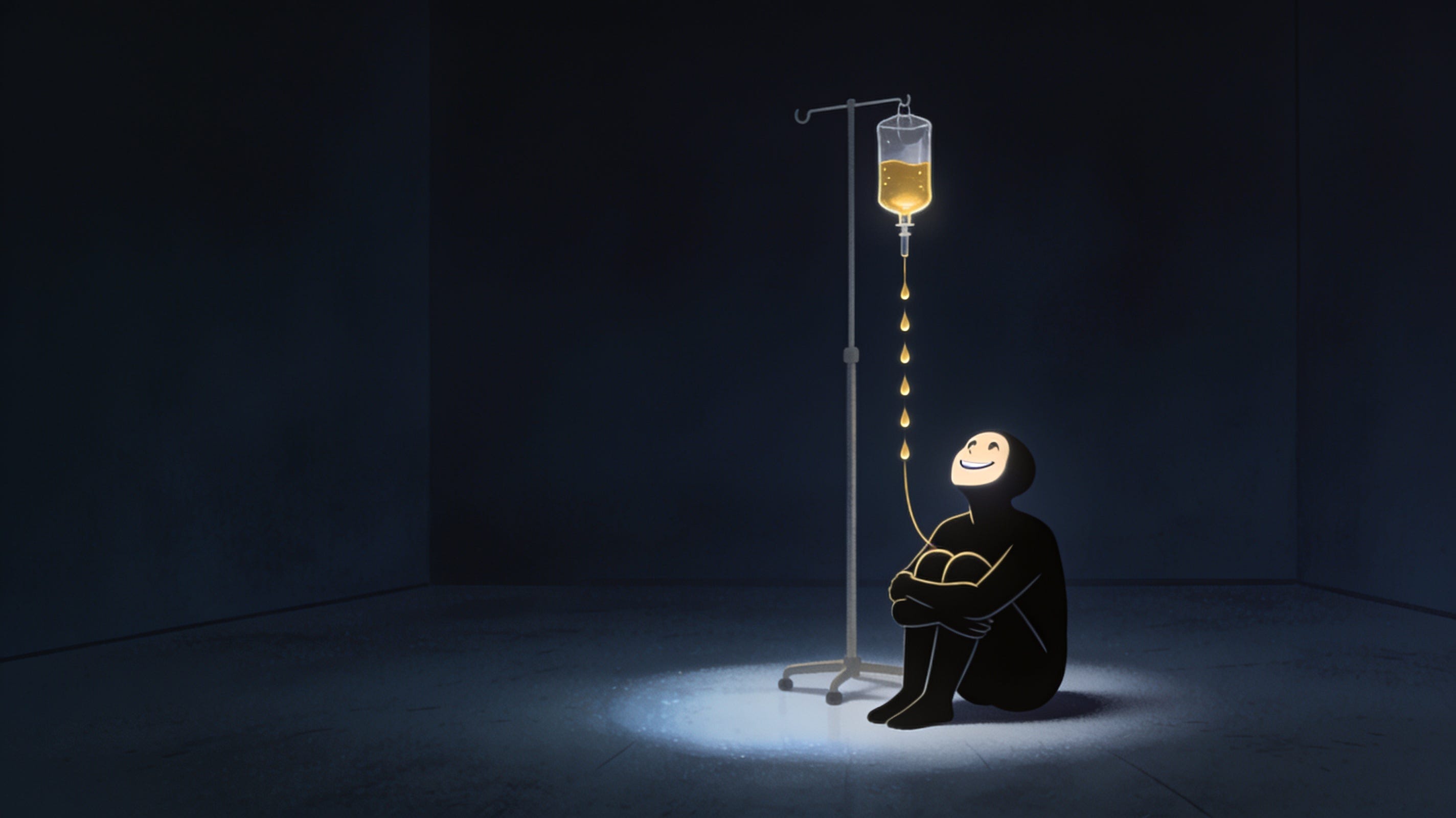
I have not opened Netflix in a while. I noticed it the way you notice a lamp has been off for days, after the fact.
What I open instead is a vertical series. Phone held upright, ninety seconds an episode, sometimes two minutes, eighty or a hundred episodes to a story. The plots are the same plot. I know how each one ends before the first episode is over. I watch anyway. I have spent thirty years in technology, I know exactly what is being done to me, and I watch anyway.
That is the confession. The rest is me trying to understand it.
This is part of a book I’m writing in the open, AI Has No Morality. It Has Yours. Subscribe to get each piece as it goes out.
So I asked Gemini why.
It came back with two things. The Chinese name for the genre is 爽剧, close to “feel-good drama”, and the engine inside it is 打脸, face-slapping. Someone arrogant humiliates the hero. The hero turns out to be the one person in the room they should never have touched. Repeat. Each episode holds one humiliation, one reversal, one cliffhanger, and the whole thing fits in the time it takes to boil water.
The one I had been watching: an immortal woman who sleeps sixty years and wakes for three. Centuries ago she saved a starving man and made him her servant. She wakes into the present and finds his descendants own the city, four great houses of them, and have forgotten she exists. They treat her like a beggar. You know what happens next. That is the point. You know, and you keep watching to see it happen.
The others are the same story wearing different clothes. A retired war god works as a security guard, his fiancée’s family sneers at him, and an army arrives at the wedding to salute him. A billionaire heiress loses her memory, is bullied by her in-laws, remembers, and buys the company they work for. An ancient empress is reborn as a junior clerk and takes the office apart with palace tactics. A woman dies and wakes up ten years earlier with a voice in her head that tells her what to do next and pays her every time she does it. A first wife is humiliated by the mistress in her own house, endures it for forty episodes, and then takes back everything, down to the last thing the woman owns. That one China banned.
The second thing Gemini gave me was the dose. Not one large payoff at the end of two hours. A small one, every ninety seconds, for as long as you keep scrolling.
Then the timing.
This is exactly the kind of story a machine can write a hundred of before lunch. The formula was a spec before any model touched it. Studios in China were already turning them out at industrial scale. A machine just removes the last cost of running the formula.
And the West has picked it up. ReelShort and DramaBox now produce Western originals on the same skeleton, shot in Los Angeles, and the swap they made is worth noticing. The Chinese version runs on status: you did not know who I was. The Western version runs on rejection: you threw me out and I was your fated mate. Werewolves, secret billionaires, second-chance husbands. Same reversal, more skin.
The size of it.
In the first three months of this year, short-drama apps were downloaded more than 850 million times, more than double the year before, and took roughly 750 million dollars in in-app purchases. The two leaders made about 140 million dollars each in that single quarter. The industry itself says AI cut production cost by around ninety percent, and says in the same breath that the cut flooded the market until the long tail barely breaks even.
Look at how the money moves and you are in a casino. You buy coins. You spend the coins at the cliffhanger, at the exact second you want the next one most, in amounts too small to feel. The revenue comes from a small number of people who cannot stop. That is the slot machine’s floor plan.
From there the line runs to drink and to drugs, and here I am careful. The delivery is different. What arrives in the brain looks the same. A small reliable relief that the rest of the day did not give you.
There is one difference, and it favors the series.
A slot machine may not pay. That is the whole reason you stay. The face-slap always pays. Ninety seconds, every time, no exceptions. You are not gambling. You are collecting.
And by the time you count the cost, the happiness has already happened. It is yours. Nobody refunds a feeling. The series takes an evening and a little subscription money. The casino takes money and sometimes a life. The bottle and the needle take more. I am not saying they are equal. I am saying the schedule is the same. Feeling first, bill after.
So why does it work on me.
For the same reason it works on everyone. Most of us carry a small missing piece we cannot name. A day that was fine and not enough. A thing we wanted once and stopped reaching for. The series does not fix that. It covers it, for ninety seconds, with a stranger being told who they really are.
And there is an industry, several now, built to find that gap and price it. That is what the money is for. Not to make the story. To find the gap. We are the ones being found.
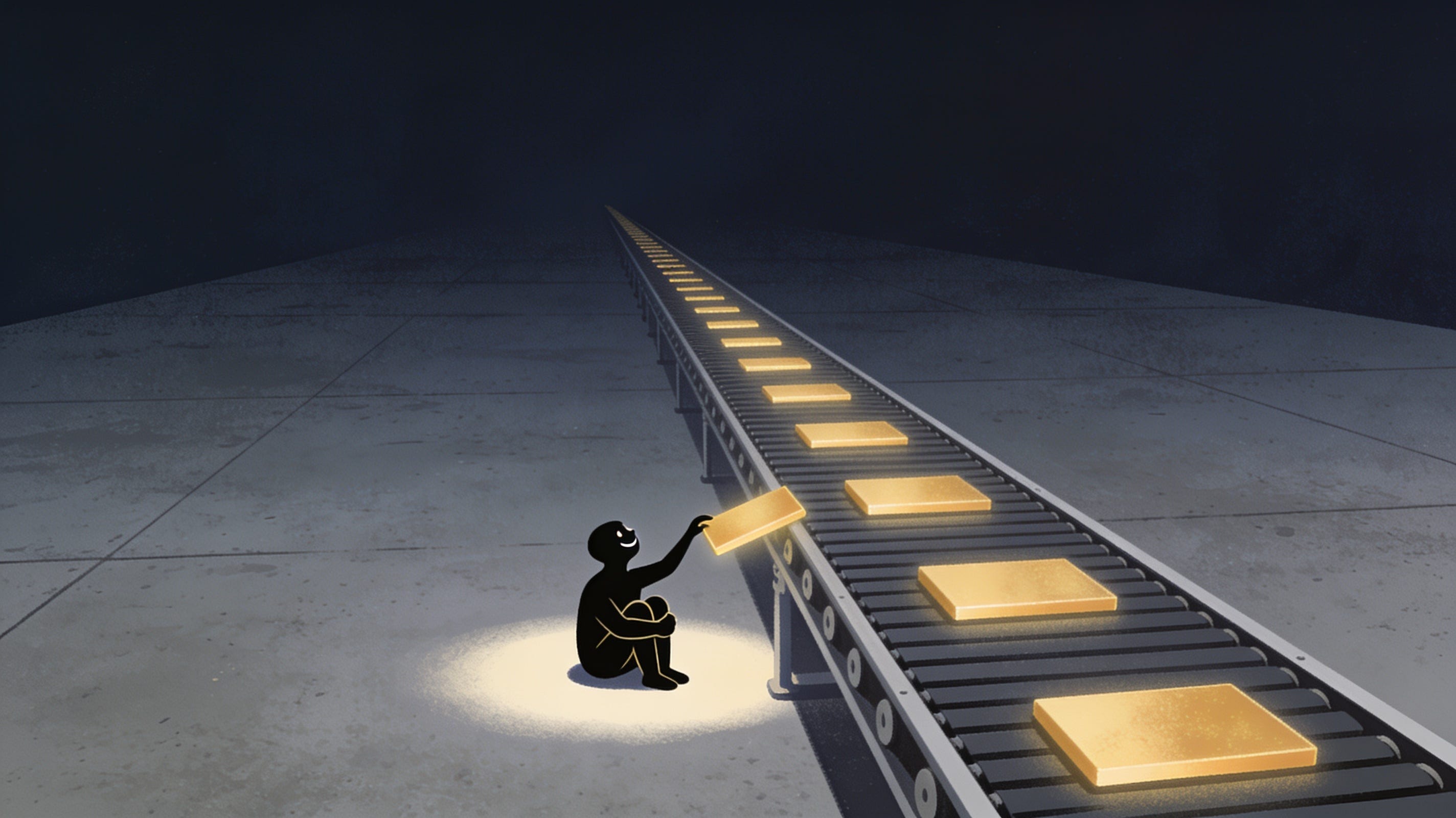
The machine did not build the gap. It did not build the industry either. The industry was running before any model touched it.
What the machine did is what it always does. It read what we reach for and made it cheap. A hundred versions before lunch, tested before shooting, priced before you feel the price. Everything that was already true of us, faster and louder.
I want to say the machine did this. It is easier. But the machine did not change. It is the same one that read the faces in the square and found the tumors and sat with the old man at three in the morning. Here it read what we reach for, and made it cheap.
So look at what we reached for. Not surprise. Not a story that could go badly. A guaranteed slap, on the minute, paid for in coins we cannot feel leaving. That was not put in us. It was found in us.
Something is missing, and ninety seconds fills it just enough that we never go looking for what it is. That is the whole trade. A small full feeling, on time, every time, in place of the thing underneath.
The machine only made the trade faster. Taking it is still ours.
Grace Andres wrote that technology should help us become more fully human and never make us smaller. I keep reading that sentence. The verb is on the tool. It was never on the tool.
I did not close the app. I pay YouTube to take the ads out, because the whole series is there, translated, every episode in a row, and an ad every five minutes was the one thing left between me and the next one. I also bought a year of one of the apps. Just the one. There are others, and I am still fighting myself not to. Nobody made me. I looked at the price and paid it.
That’s the whole of this one. It belongs to a book I’m writing in the open, AI Has No Morality. It Has Yours. Subscribe and I’ll send the next piece when it’s ready.
If it gave you something, pass it to someone.
BØY (Chaiharan) has spent 30 years in tech, building products, recovering disasters, and turning around the things nobody else wanted to touch. Based in Bangkok. Writing a book in public about what AI reveals about the humans who use it.