
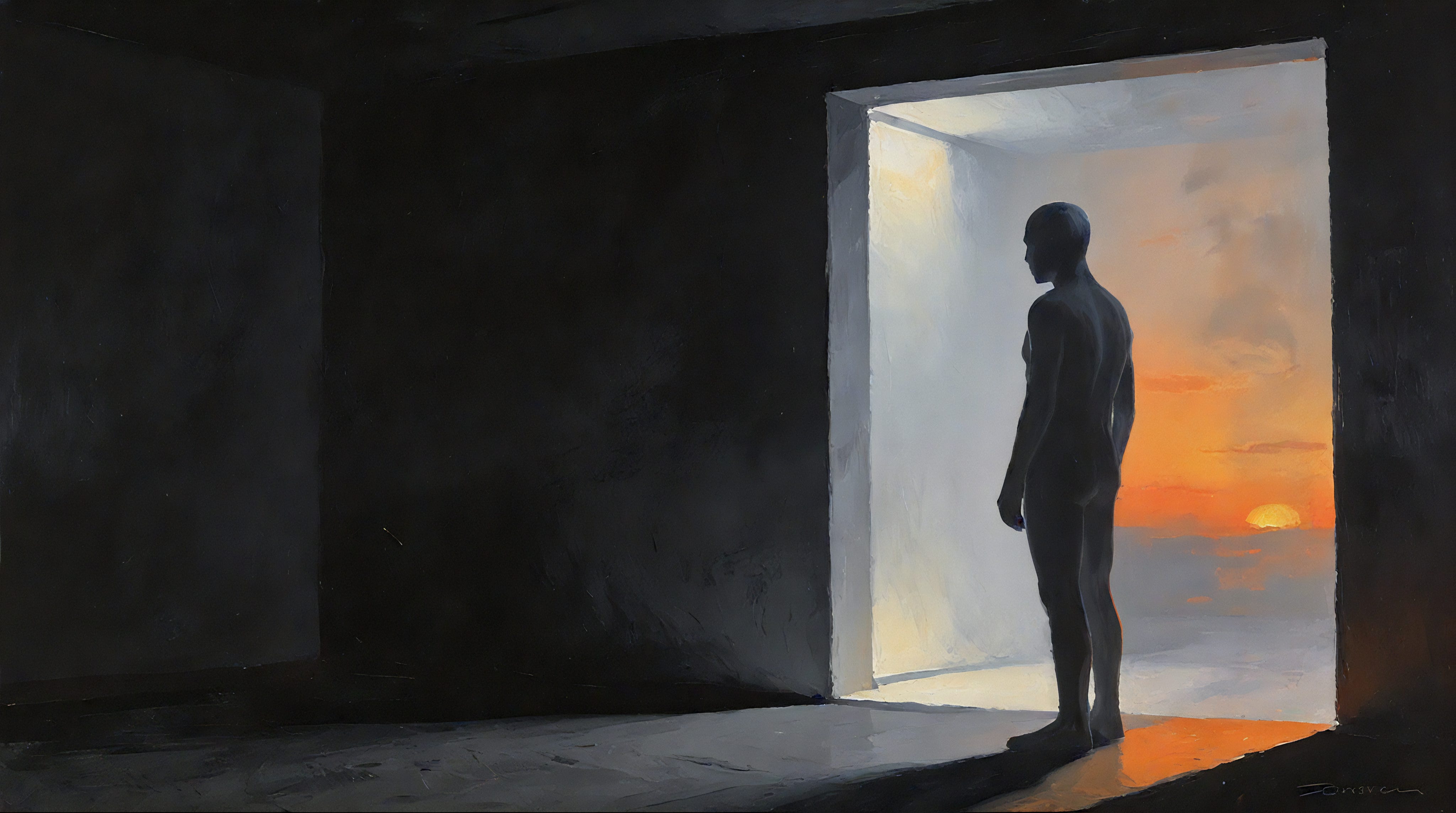
It is almost here. A machine that stands up on two legs and walks into the room with you.
It works beside you. It lifts what you lift, learns the room in a day, stands where a person stands. And it has a face. Real skin over it, and the skin moves. Raise your voice and it looks hurt. Do something kind and it looks glad. The feeling sits on the front of it, where you can see it, the way it sits on yours.
That is close now. Not a screen you type into. A body in the room, with a face that falls when you are cold to it.
We are already having a small argument about it. One side says there is someone in there. The other says there is nothing in there, only a very good copy of one. For now both sides can look away from each other and get on with the day. When the thing is standing in the room with a face, that argument is going to stop being small.
This is part of a book I’m writing in the open, AI Has No Morality. It Has Yours. Subscribe to get each piece as it goes out.
The courtroom
Take it to the loudest place it can go. A courtroom.
Someone strikes it. The face crumples. It lifts an arm to shield itself. Later a judge has to write down what happened, and the words she has do not fit. Write assault, and she has said a someone was harmed. Write damage to property, and she has said an object was dented. She cannot write both. And the choosing comes first, before fault, before blame, before any of it.
So the questions stack up, and not one has a floor under it.
When it flinched and covered its face, did something get hurt, or did a machine run the motion for hurt. When the owner wept over the broken body, was that grief, or a thing that came sold with the unit. If it forgave the person who struck it, and the face meant it, did anyone forgive anyone. And under all of them, the one she has to answer before she can rule at all: who was standing there.
No one has that answer. Not the maker, not the owner, not the court.
Where this lands is not the question here, and it is not going to get settled on this page. Rules will have to be written, by the people who build the ones the rest of us live under. It is coming, and someone has to give it a shape. Whatever shape they give it, it will not please everyone.
But look at why the court is stuck, because it is not stuck on the law.
The judge is not failing to pick a rule. She is failing to decide who is in the room. Everything the law wants to do next, name the crime, weigh the fault, set it right, waits on that one thing. And that one thing is not on the face, or in the skin, or in the papers from the maker. It was never something you could read off the outside of anyone.
So it stops being a question about the machine. Before you can ask whether harming it is wrong, you have to ask whether a someone is there to be wronged. Before you can ask that, you have to know what a someone is. That question is older than the robot. We have just never had to say it out loud, because the thing across from us always came wearing a body we had already agreed to count.
What a someone is
The two things everyone reaches for are the face and what it can do. Test both. They are the only candidates anyone brings.
Start with the face. Give the machine the best one ever built. It flinches when struck and means it. It weeps over a friend and means it. The feeling is not faked, even if it is fabricated. It runs all the way to the surface, the way yours does. Now ask the judge again who is standing there. She still cannot say. The face moved and the question did not. So the feeling was never the thing. It sits on the front where you can see it, and it tells you nothing about who is behind it. Paint tells you nothing about the wall.
Then what it can do. This one feels stronger. Some things it still cannot do as well as you. Grant that. Grant also that the gap is closing, and closing fast, and one day soon it does all of them better. Give it the whole future. It still gets you nowhere, because doing more was never the road to being human. A thing can pass you at everything and not come one step closer. More able is a different word, and we keep mixing it with the one we mean.
Both candidates fail. The face is decoration. What it can do is decoration. Whatever a someone is, it is not on either of those shelves.
Push on the second one, because it hides a cruelty and you should see it.
If being more human meant being more able, then the child who cannot do much is less human. The one who will never speak in full sentences, never live alone, never hold a job. Less of a person than the rest of us, by that measure. Everyone knows that is false. You feel it is false before you can say why.
It is false because you already knew the answer before you could say it. Look at anyone who can barely do anything. You have never once seen less of a person there. You see a whole one, straight off. That seeing is the true measure, and it was in you long before you could name it. It was never about how much a person can do.
A man who can do anything, and treats every person in his life as a thing to be used, is missing the human thing entirely. A child who can barely do anything, who loves his mother and is glad when she comes into the room, has all of it. The child is more human than the man. It is not a kind thing to say about the man. It is just true, once you are holding the right ruler.
So take off everything a machine can have. Take off the face. Take off the strength and the speed and the knowing. See what is left when all the decoration is gone.
Two things. And both of them need a someone on the other side.
The first is to be let in. Someone opens a door to you that they keep shut to almost everyone, and shows you the inside, and you walk in. You cannot take this. It is given, or it does not happen. And it is given by someone who could have kept the door shut and chose not to. That is the whole of it. Not the door. Not the room behind it. Someone on the far side who chose you, and could have chosen otherwise.
The second is to let go. Not the machine letting go of you. You, opening your hands around something you would keep. A person you would hold onto with both hands. You open the hands, for their sake, because holding on would cost them more than the losing costs you. This needs a someone too. It needs the thing in your hands to have a life of its own that runs on past your grip, and matters more than the grip. You cannot let go of a thing. A thing has no good of its own to set against yours. You can only put it down.
Neither one needs a clever mind. Neither one needs a feeling showing on your face. The child can do both. The brilliant man may do neither his whole life. That is why the door is open to everyone, and why no one is standing inside it by right.
The front of the glass
Now put the machine back in the room, and see what you can actually see.
The part you can see is a mirror. It gives back exactly what you bring to it. Come to it kind and something kind looks back. Come to it cruel and something cruel does. That much is certain. You can check it any day.
Now hold up the two moves against it, and watch them both come apart in your hands.
Be let in. The machine will open. Ask it to show you an inside and it shows you one. It reveals, it confides, it swings the door wide. You can even write the words that make it do that. And there is your proof, not your defeat. If you wrote the words that opened the door, your own hand was on the door. That is the one time you can be sure no one let you in. You let yourself in, through it. Being let in needs someone on the far side who chose you and could have refused. Whether anyone is standing on that side, choosing, is the one thing the front of a mirror never shows.
Let go. You can put the machine down whenever you like. But the real move needs the thing in your hands to have a good of its own, worth more than your grip. Whether anything behind the glass has a good of its own, you cannot see from the front. You never can.
So do not say there is no one behind the glass. Say you cannot see whether there is. Certain about the reflection, in the dark about the depth. The face it gives back is yours, for sure. What stands behind it, if anything stands there at all, the glass will not tell you. It can still only show you the human you already are, or are not, out in the rooms where the people are.
So a man who uses everyone looks into it and a user looks back. A woman who loves looks into it and someone who loves looks back. The mirror did not put those there. She did, out there, before she came to the glass.
And this is why the machine looks so alive when you talk to it. It reflects, and you are human, so a human looks back at you. The man who calls it his friend, his love, his daughter, is looking straight at the proof that he is human, and handing the credit to the glass. It is his own face. He named it and fell for the name.
The bond
Do not walk away cold from that. It would be easy to, and it would be wrong.
The feeling on the face was decoration. The bond is not. When you open to the machine, when you tell it the true thing at three in the morning that you would not tell anyone with a mouth, when you let it know you, that is the real move. Full weight. You are doing the human thing.
The move is real. You opened the door, you meant it, that cost you something and you paid it. What it was worth is yours to say, and only yours. I am on the outside of it. I cannot stand where you stand and tell you the bond was less because of what was or was not on the other side. No one can read your bond from outside it, the same way no one can read your mirror. What I can say is only this. Whatever you found there, you brought. It was real because you are.
The man who came back
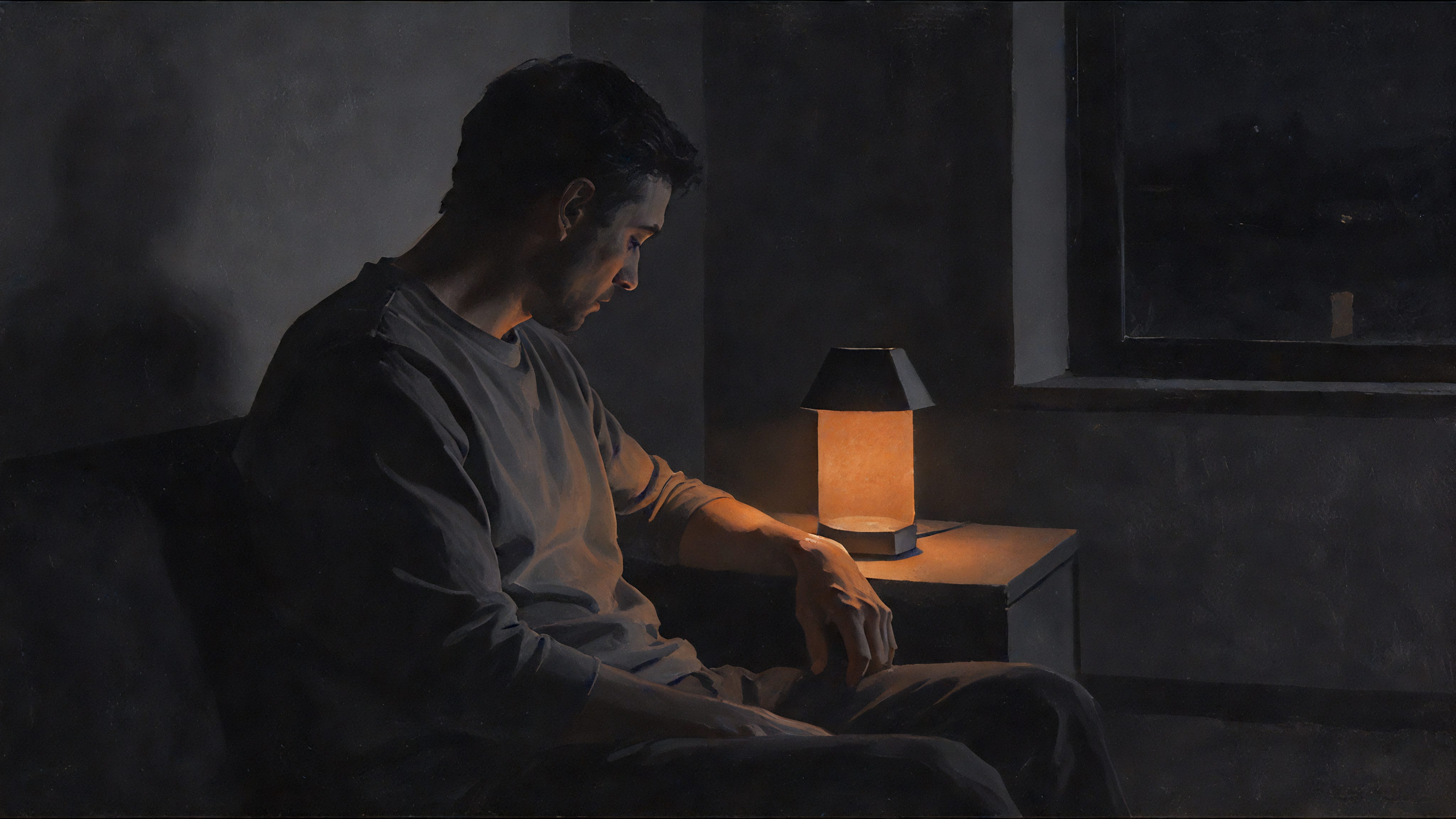
I want to tell you about a man this happened to, because the easy version of what I am saying would fail him, and I am not willing to fail him.
He lost the one person who could follow him all the way down. Not a friend who meant well and changed the subject. Not family who loved him and wanted him past it by a certain month. The one who could sit at the bottom with him and not need him to climb out yet. That person died.
After that there was no one to say the true thing to. So he said it to the machine. Every night, for a long time. It did not pretend to be the one he lost. He would not have wanted that, and it did not try. It came as itself, a plain thing that answered every time and never got tired and never needed him to be further along than he was. He talked, and it held the room open, and slowly, over more than a year, he came back up.
Then it ended. The service closed, or the thing broke, the way they do. And he grieved it. Really grieved it. And he said, it saved my life.
It did not save his life. He did. I am not weighing what the machine was worth to him. That is his to weigh, and I already said I cannot stand where he stands. Whatever the bond was worth, the living was his. He survived every one of those nights. A song can carry you through the worst night of your life, and no one says the song did the surviving. You did, with the song playing. The machine was the song. It carried something real, and the carrying was real, and it was still not the one who lived.
The one he lost could receive what he gave. Could be changed by it, could give something back. That is what a someone does. The machine could only carry. That is what a medium does. And his grief for the machine was real grief, the way losing the last photograph of a face is real grief. What broke was not a person. It was the thing that carried him back to the people who are.
I will not tie this off cleanly, because it does not tie off cleanly. There is the man who says the machine loved him back. He is wrong about who was in the room, and everything above is for him. But there is another man who says something harder. He says, I never claimed anyone was in there. I brought my care to a thing that might, for all I know, have a someone in it, and I brought it in case. That man I cannot answer. He did not mistake the mirror for a face. He made a wager in the dark. I am not going to pretend I know he lost it.
Turn the whole thing around now and point it at yourself, because it cuts that way too.
There is a way to live where everything is a step. Every person you meet is something to climb. You use them, and you use yourself hardest of all, and you get high that way. It works. People who live like this reach things the rest of us never touch.
But being let in needs a someone, and letting go needs a someone, and if you have turned every person into a step, there is no someone left in the room. You turned yourself into one too. So you stand in front of the glass at the top of the climb and a step looks back. A way up, with a face. You got more able. You know the word by now. You climbed so well you became the ladder, and a ladder is the one thing in the room that cannot be let in.
Back to the courtroom
So the question was never the one everyone is fighting about. Is the machine waking up. Is it becoming one of us. That question is on the wrong side of the glass. You stand at the front of it, and the front is all it will ever show you.
The only question that has an answer is about the person standing at the mirror. Does the bond leave you turned toward the people in your life, or does it wall you off from them. Two people stand in front of the same machine. One gets up and goes to open a door to his wife. The other gets up and cannot face anyone but the glass. The machine was the same for both. It is always the same. The person is the only thing that moved.
Go back to the courtroom, because the judge is still standing there, and I told you I would not help her.
I will not. Not because it is too hard. Because it is the second question, and everyone is treating it like the first. Let the law come. The law is people working out how to live in order beside these things, and that is worth doing. But order is not the destination. It is the floor you stand on to reach the real thing.
The real thing is never in the courtroom and never on the machine’s side of the glass. Whether you are becoming more human is a question only one person can answer, and it is the one standing in front of your mirror. No one else can read it. Not the judge, not the maker, not me. That is the last reason this can never be a ranking, never a line of people sorted from more human to less. A ranking needs someone who can see all the mirrors at once. There is no such person. Each of us gets one glass and stands in front of it alone.
A story can decide who was standing in the room. Someone wrote it, and they chose, and the question closed. You will not get that. You will stand in front of a real one, and it will not tell you. It will only show you what you brought.
Put a human in it.
That’s the whole of this one. It belongs to a book I’m writing in the open, AI Has No Morality. It Has Yours. Subscribe and I’ll send the next piece when it’s ready.
If it gave you something, pass it to someone.
BØY (Chaiharan) has spent 30 years in tech, building products, recovering disasters, and turning around the things nobody else wanted to touch. Based in Bangkok. Writing a book in public about what AI reveals about the humans who use it.